Ads
The Most Venomous Snake in Vietnam: Why Peron's Sea Snake Outranks the King Cobra
khoảng 2 tháng trước
00When people think of dangerous snakes in Southeast Asia, the King Cobra often comes to mind due to its size and fearsome reputation. However, in terms of pure toxicity, the Peron's Sea Snake (Hydrophis peronii) is the true champion of venom in Vietnam. Ranking as the most venomous snake in the country, this marine reptile possesses a neurotoxic venom so potent that it makes the King Cobra's bite seem significantly less lethal by comparison. Globally, Peron's Sea Snake sits at number five on the list of the world's most venomous snakes, trailing only behind legends like the Inland Taipan and the Dubois's Sea Snake.
Peron's Sea Snake is primarily found in the coastal waters of Northern Vietnam, as well as the provinces of Binh Thuan, Ba Ria - Vung Tau, and Ca Mau. While they spend their lives in the ocean, they must frequently surface to breathe air, which is often when they encounter humans, particularly fishermen. Despite their deadly potential, they are generally not aggressive unless provoked or caught in fishing nets. Their venom is designed to quickly incapacitate fish and eels, but if a human is bitten, the results can be fatal within a very short window without specialized antivenom.
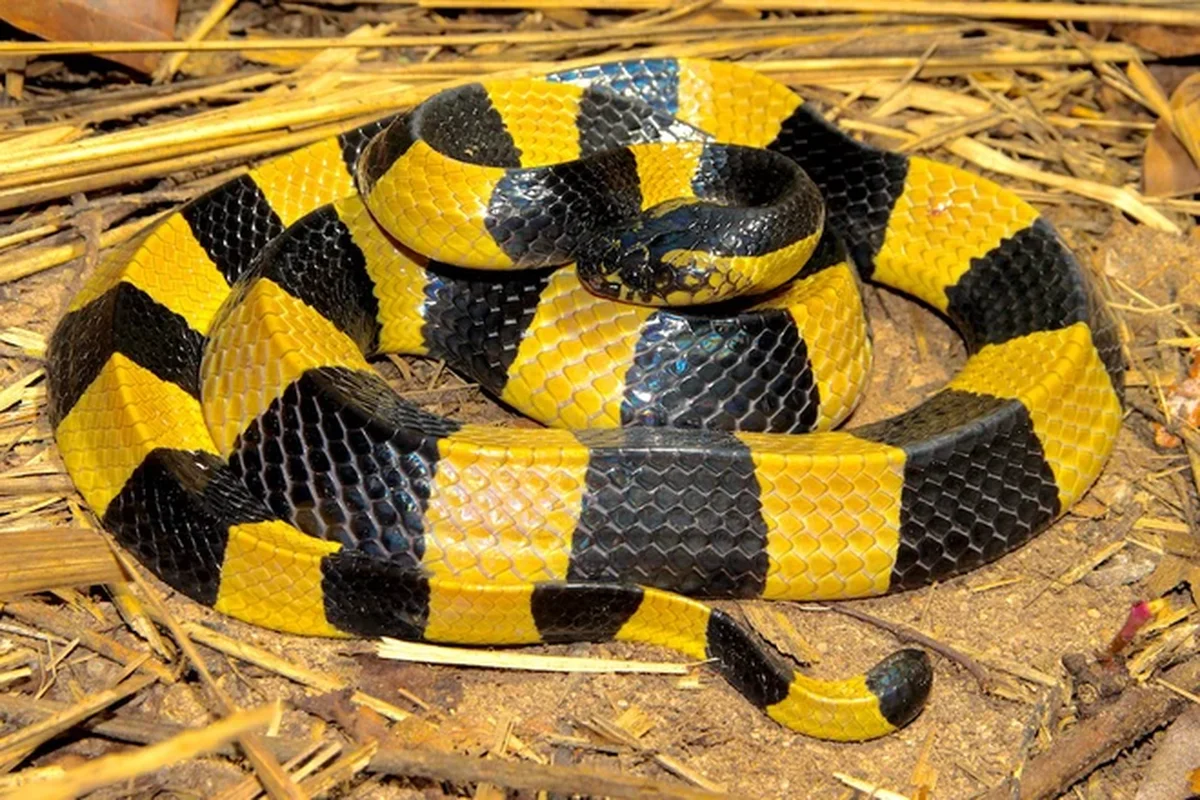
Vietnam is also home to several other highly dangerous land snakes, such as the Banded Krait and the Malayan Krait. The Banded Krait is easily recognizable by its alternating black and yellow bands. While it is generally shy during the day, its venom is extremely powerful and can cause respiratory failure in as little as 30 minutes. The Malayan Krait is even more dangerous, with a mortality rate of up to 70% if left untreated. Understanding these species is crucial for residents and travelers alike. While the King Cobra is undoubtedly a majestic and dangerous predator, the silent and highly toxic sea snakes of Vietnam represent the peak of evolutionary chemical warfare in the animal kingdom.
#PeronsSeaSnake, #VenomousSnakes, #WildlifeVietnam, #KingCobra, #MarineLife, #SnakeSafety, #Herpetology
0 comments
Ads
Related Posts
Ads