Ads
The Science Behind China's Strange Egg-Laying Cliff of Chan Da Ya
khoảng 2 tháng trước
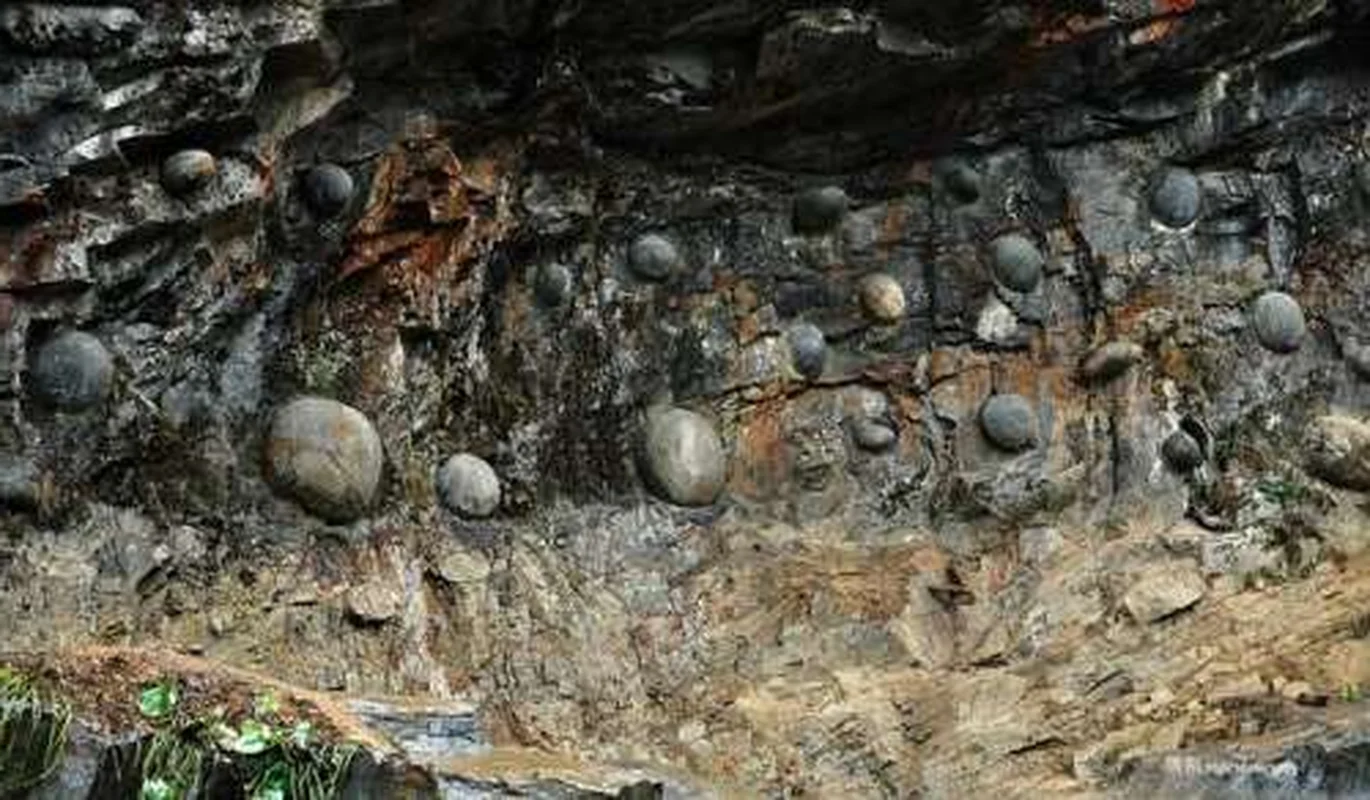
00The mysterious Chan Da Ya cliff in China's Guizhou province continues to puzzle scientists and capture the imagination of travelers worldwide. Known as the 'egg-laying cliff,' this geological wonder features a steep rock face that slowly pushes out smooth, round stone spheres resembling massive eggs. Over a cycle of approximately 30 years, these stone formations mature and fall from the cliff, leaving empty sockets behind while new ones slowly begin to form.
To understand this bizarre phenomenon, geologists have conducted extensive studies on the stratigraphic layers of Mount Gandeng. The research indicates that the cliff is made up of ancient marine sediments from the Cambrian period, dating back over 500 million years. The cliff face itself consists of soft, easily weathered calcareous rock. In contrast, the stone eggs are hard concretions formed from silicon dioxide and dense mineral deposits. Because the surrounding limestone erodes at a much faster rate than the hard concretions, the 'eggs' are gradually exposed over decades until gravity finally pulls them down.
While the basic chemical and physical processes of differential weathering explain how the stones are released, the perfect spherical shape of the concretions remains a subject of scientific study. Concretions typically form when mineral cement accumulates around a nucleus, such as a shell or leaf, growing outward in symmetrical layers. Chan Da Ya stands as a magnificent, real-world laboratory of geological evolution, demonstrating how time, water, and mineral composition can collaborate to create breathtaking, natural works of art that challenge our understanding of the earth.
#GeologyScience, #ChanDaYa, #EarthMysteries, #GuizhouGeology, #NaturalFormations, #ScienceExploration
0 comments
Ads
Related Posts
Ads