Ads
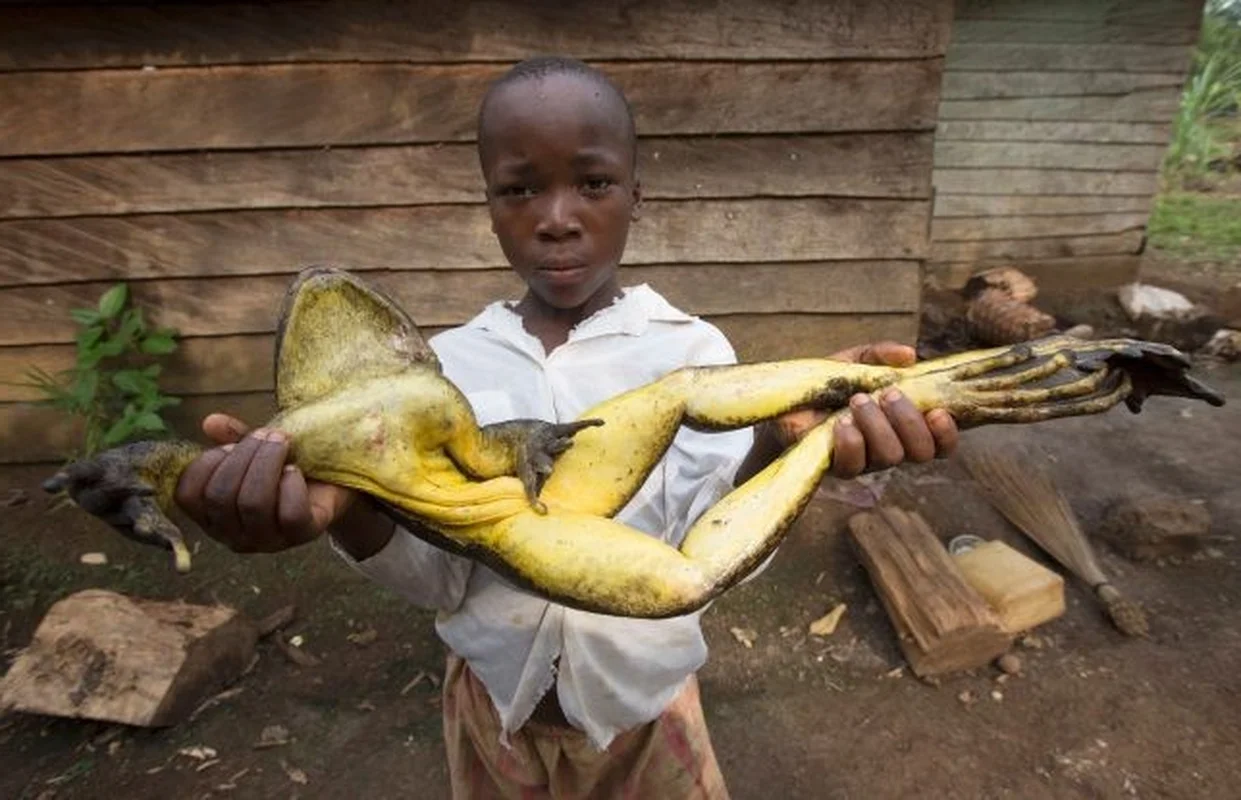
Discover the Goliath Frog: The World's Largest Frog the Size of a Human Child
khoảng 2 tháng trước
00Nature never ceases to amaze, and the Goliath frog (Conraua goliath) is a prime example of evolutionary wonder. Native to the equatorial forests of West Africa, specifically Cameroon and Equatorial Guinea, this amphibian is the undisputed heavyweight champion of the frog world. These massive creatures can grow up to 32 centimeters in length and weigh over 3 kilograms, making them roughly the size of a small child. Despite their bulky appearance, Goliath frogs are incredibly agile. They are powerful swimmers and can leap up to 3 meters in a single bound. They primarily inhabit fast-flowing rivers and humid tropical environments where they hunt for a variety of prey, including insects, crabs, small snakes, and even other frogs.
One of the most fascinating aspects of the Goliath frog is its reproductive behavior. During the breeding season, the males exhibit a unique form of parental care, though they are also known for building 'nests' out of rocks to protect their offspring. Unfortunately, this magnificent species is currently facing significant threats. Their meat is considered a delicacy in local markets, described as having a sweet and tender flavor. However, because they cannot be easily bred in captivity and require very specific natural conditions to thrive, over-harvesting is depleting their populations rapidly. Additionally, habitat loss due to deforestation and pollution in West African rivers is putting the species at risk of extinction. Conservation efforts are now more critical than ever to ensure that the world's largest frog doesn't disappear from the wild. Protecting their natural river habitats and regulating the trade of Goliath frog meat are essential steps in preserving this unique giant of the amphibian world for future generations to admire.
#GoliathFrog, #WildlifeConservation, #GiantAnimals, #WestAfrica, #NatureFacts, #Amphibians
0 comments
Ads
Related Posts
Ads