Ads
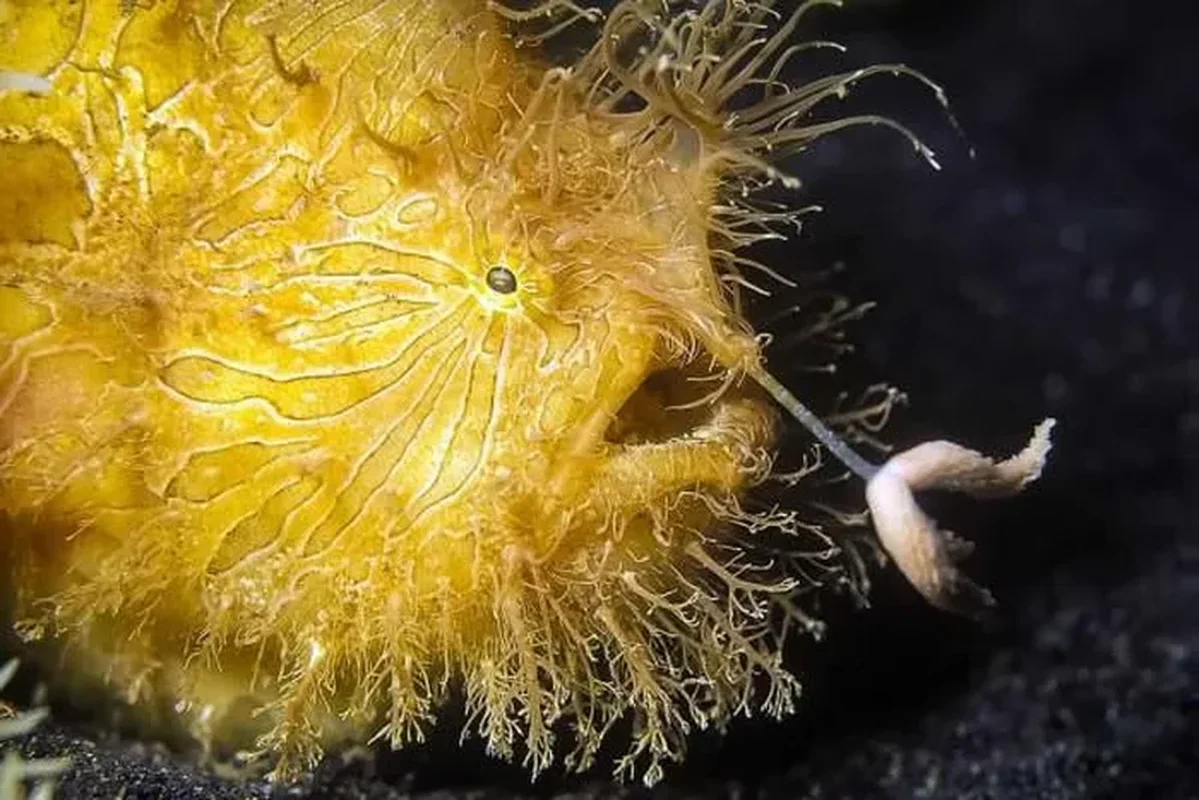
The Weird Hairy Frogfish: Lightning Fast Strike in 1/6000 of a Second
khoảng 2 tháng trước
00The depths of our oceans are home to some of the most bizarre and fascinating creatures on Earth, but few can match the sheer eccentricity of the Striated Frogfish, commonly known as the 'hairy' frogfish (Antennarius striatus). Covered in uneven, hair-like spinules that mimic algae or marine debris, this unique marine predator boasts one of the most astonishing hunting mechanisms in the animal kingdom, executing a lethal bite in a mind-blowing 1/6000 of a second.
Found primarily in warm, tropical waters, the hairy frogfish is a master of camouflage. Instead of swimming, it uses its modified pectoral fins to walk along the sandy ocean floor, blending seamlessly with its surroundings. To lure its prey, the frogfish utilizes a specialized appendage on its head called an 'esca,' which resembles a small worm. When an unsuspecting fish or shrimp approaches to investigate, the frogfish opens its mouth with such incredible speed and force that it creates a vacuum, sucking the prey inside instantly. This strike is so fast that it is virtually invisible to the naked human eye, requiring high-speed cameras to capture the physics of the movement.
For marine biologists and underwater photographers, encountering a hairy frogfish is a rare and exciting privilege. Its unique appearance and predatory prowess make it a subject of endless fascination. Understanding how these creatures survive and hunt in their natural habitats highlights the incredible diversity of marine life and the complex evolutionary adaptations that allow deep-sea species to thrive in competitive underwater ecosystems.
#HairyFrogfish, #MarineBiology, #OceanCreatures, #DeepSeaLife, #FastestPredator, #UnderwaterPhotography
0 comments
Ads
Related Posts
Ads