Ads
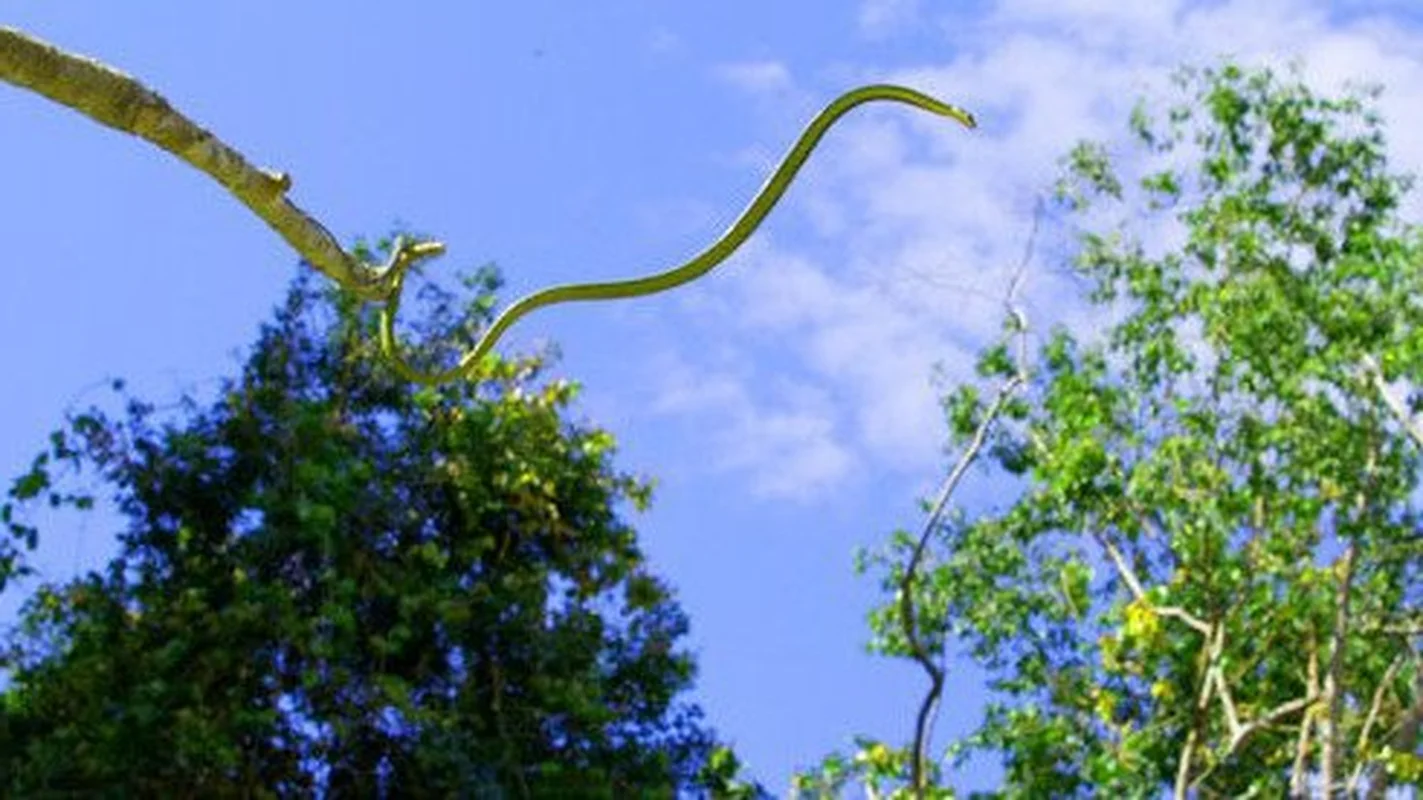
Nature’s Gliders: The Incredible Flying Snakes of Vietnam and Southeast Asia
khoảng 2 tháng trước
00When we think of animals that fly, birds, bats, and insects usually come to mind. However, nature has a way of surprising us, and the Chrysopelea, better known as the flying snake, is one of the most remarkable examples of biological engineering. Found in the lush jungles of Southeast Asia, including the diverse ecosystems of Vietnam, these snakes have developed the ability to glide through the air to escape predators or move between trees efficiently. There are five recognized species of flying snakes, with the Paradise Tree Snake (Chrysopelea paradisi) being the most famous for its aerial acrobatics. You might wonder how a creature without wings can 'fly.' The process is actually a feat of physics. When a flying snake prepares to jump, it slithers to the end of a branch and launches itself. Once in the air, it pulls its ribs forward and flattens its body, doubling its width and creating a concave C-shape that acts like a parachute. By undulating its body in a S-shape motion, it generates lift and can steer itself with surprising precision, gliding for distances of up to 100 meters. In Vietnam, these snakes are often spotted in the southern provinces and central highlands. While the idea of a flying snake might sound terrifying to some, they are actually mildly venomous and pose very little threat to humans. Their venom is specialized for small prey like lizards, frogs, and bats. Seeing one in the wild is a rare and breathtaking experience, as they move with a grace that seems to defy gravity. Researchers are currently studying the aerodynamics of these snakes to inspire new designs for small, agile drones and gliding robots. The flying snake is a testament to the incredible adaptability of wildlife in tropical rainforests, proving that even the most grounded creatures can reach for the skies when evolution calls.
#FlyingSnakes, #WildlifePhotography, #VietnamNature, #Chrysopelea, #NatureIsAmazing, #Herpetology
0 comments
Ads
Related Posts
Ads