Ads
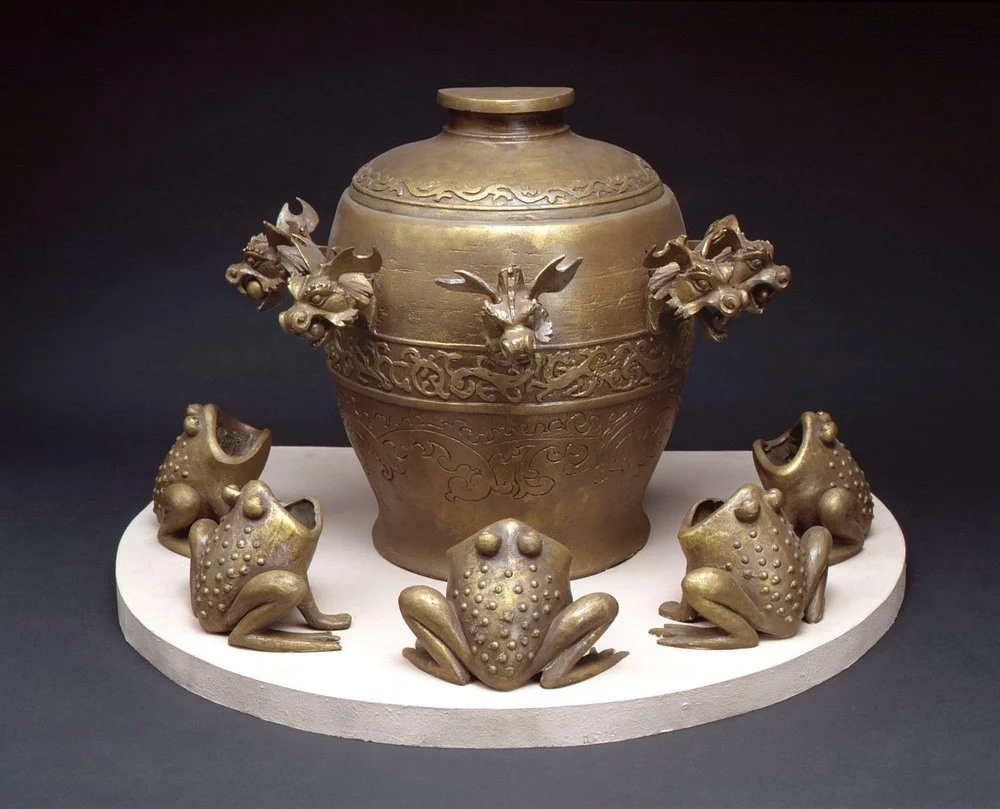
The Mystery of Zhang Heng's 2,000-Year-Old Ancient Seismoscope Revealed
khoảng 2 tháng trước
00For centuries, historians and scientists have been fascinated by one of the most remarkable inventions of the ancient world: the seismoscope created by Chinese polymath Zhang Heng in 132 AD. Known as the Houfeng Didong Yi (literally 'instrument for measuring the seasonal winds and the movements of the Earth'), this device was capable of detecting earthquakes from hundreds of miles away, long before the seismograph was reinvented in the West. This article delves into the fascinating history, the inner workings, and the modern scientific efforts to reconstruct this ancient engineering marvel.
Zhang Heng, a brilliant astronomer, mathematician, and geographer of the Han Dynasty, designed a large bronze vessel resembling a wine jar, measuring nearly six feet in diameter. On its exterior, eight dragons faced downwards, corresponding to the primary compass directions. Each dragon held a small bronze ball in its mouth. Directly beneath each dragon sat a bronze toad with its mouth open, ready to catch a falling ball. When an earthquake occurred, even one too faint for humans to feel, the internal mechanism would release a ball from the dragon pointing in the direction of the seismic activity, dropping it into the toad's mouth with a loud clang.
Modern researchers have spent decades trying to reverse-engineer Zhang Heng's seismoscope. The primary challenge lies in the fact that no physical remnants of the original device survived, and the historical records offer only brief descriptions of its internal components. Most experts believe the device operated on a delicate pendulum-based system. An internal pendulum suspended in the center of the vessel would swing in response to seismic vibrations. This movement would trigger a series of levers linked to the dragons' mouths, releasing the ball.
In recent years, Chinese seismologists and historians have successfully built working replicas using advanced physics and acoustic modeling. These modern reconstructions have proven that a pendulum system is highly sensitive to low-frequency seismic waves, validating Zhang Heng's design. The invention of the seismoscope highlights the advanced state of scientific inquiry in ancient China, showcasing a profound understanding of physics, mechanics, and metallurgy. Today, Zhang Heng’s seismoscope remains an enduring symbol of human ingenuity and a testament to the ancient roots of modern seismology.
#AncientInventions, #Seismoscope, #ZhangHeng, #ChineseHistory, #AncientScience, #EarthquakeDetection
0 comments
Ads
Related Posts
Ads