Ads
Discover the Unique Lunar New Year Traditional Dishes of Vietnam's Ethnic Minorities
3 tháng trước
00Lunar New Year, or Tet, is the most sacred and celebrated festival in Vietnam. While the mainstream celebrations feature iconic dishes like green Chung cake and boiled chicken, the mountainous regions and ethnic minority communities of Vietnam welcome the spring with an incredibly rich, diverse, and unique culinary heritage. Exploring these traditional Tet dishes offers a fascinating glimpse into the cultural depth and culinary artistry of Vietnam's highland ethnic groups.
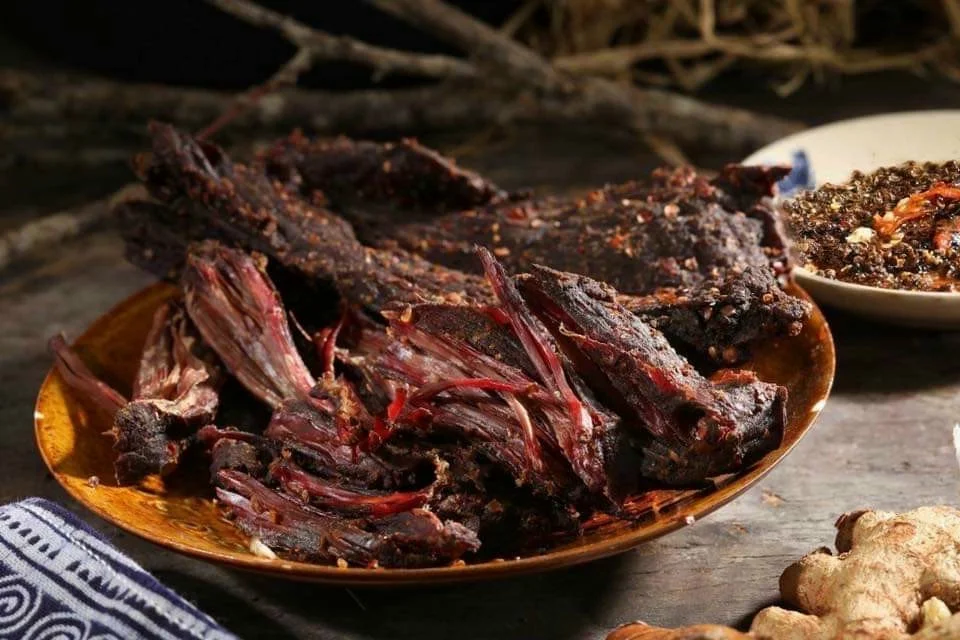
One of the most famous delicacies is 'Thịt trâu gác bếp' (smoked buffalo meat), a traditional specialty of the Northwest highlands. Selected cuts of buffalo meat are seasoned with local spices, including garlic, ginger, chili, and the signature mountain spices 'mắc khén' and 'hạt dổi'. The seasoned meat is then skewered and hung over wood-burning hearths, where it slowly cures and absorbs a deep, smoky aroma.
Another legendary dish is 'Khâu nhục' (slow-braised pork), a festive staple for the Tày, Nùng, and Sán Dìu ethnic communities. This labor-intensive dish requires pork belly to be marinated in a complex blend of five-spice powder, garlic, chili, rice wine, vinegar, and local herbs before being steam-cooked for up to twelve hours. The result is an incredibly tender piece of meat that practically melts in your mouth, traditionally served alongside mustard greens and wood ear mushrooms.
The Mông people celebrate Tet with 'Bánh láo khoải' (or Lao Khoai cake), a rare treat made exclusively for the New Year. It is prepared by thoroughly cooking ground corn, pressing it onto stone slabs, shaping it into ovals, and coating it with a mixture of lard and wild honey. This corn cake can be sliced thin and grilled over charcoal or cooked in a sweet broth.
For the Thái people of the Northwest, 'Pa pỉnh tộp' (grilled folded fish) is an indispensable dish on the Tet guest table. Fresh carp or catfish is split along the spine, stuffed with aromatic herbs, wild ginger, and thính (roasted rice powder), then folded and grilled over hot coals.
In Tày and Nùng households, you will find 'Bánh cooc mò' (horn-shaped sticky rice cake). Made from premium glutinous rice washed in pure mountain spring water and wrapped in fresh dong leaves, this simple yet fragrant cake represents the purity of nature.
Further south, the M'nong people of the Central Highlands prepare 'Canh thụt' (bamboo-tube soup). This rustic dish combines local forest vegetables, rattan shoots, and river fish, slow-cooked inside a bamboo tube over an open flame.
Finally, the striking 'Bánh chưng đen' (black Chung cake) offers a unique twist on the traditional green cake. Colored naturally with ash from burned straw or local mountain plants, this black sticky rice cake is wrapped into cylinders and filled with savory pork and mung beans, offering a rustic, earthy flavor that defines the highlands' New Year.
#TetFestival, #VietnameseFood, #EthnicMinorityFood, #CulinaryHeritage, #TravelVietnam, #VietnameseTet
0 comments
Ads
Related Posts
Ads