Ads
The Secrets of Qin Shi Huang’s Tomb: Was the Emperor Buried with His Son?
khoảng 2 tháng trước
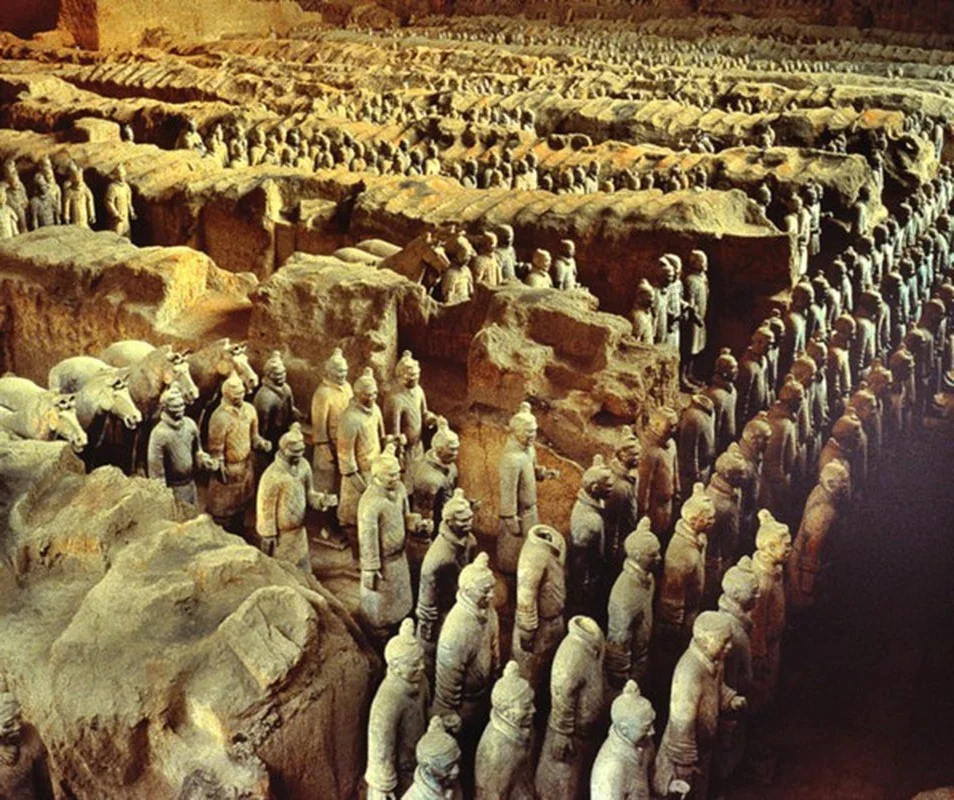
00The mausoleum of Qin Shi Huang, the first Emperor of China, remains one of the greatest archaeological mysteries on Earth. While the world is familiar with the silent ranks of the Terracotta Army, the inner sanctum of the tomb itself remains unopened and shrouded in legend. One of the most haunting questions surrounding the burial is the fate of the Emperor's children and whether any were interred alongside him. Historical records suggest a dark and bloody transition of power following the Emperor's death in 210 BCE.
According to the 'Records of the Grand Historian' by Sima Qian, the Emperor’s youngest son, Huhai, seized the throne through a forged decree, leading to the forced suicide of the rightful heir, Prince Fusu. To consolidate his power, Huhai reportedly ordered the execution of many of his siblings. Recent excavations near the main burial mound have uncovered pits containing skeletal remains that show signs of violent deaths, accompanied by royal artifacts. These findings suggest that the Emperor's children were indeed buried within the vast funerary complex, though perhaps not in the main coffin with their father.
The tomb of Qin Shi Huang is said to be a microcosm of his empire, complete with rivers of flowing mercury and celestial maps on the ceiling. The possibility of finding members of the royal family within the complex adds a layer of tragedy to the Emperor's quest for immortality. Researchers believe that the burial of his children—whether as part of a ritual or a political purge—was intended to serve the Emperor in the afterlife. As technology advances, archaeologists hope to eventually explore the main chamber without damaging the precious artifacts, potentially revealing the truth about who exactly lies beside the man who unified China.
#QinShiHuang, #AncientChina, #TerracottaArmy, #Archaeology, #HistoryMysteries, #ChineseHistory
0 comments
Ads
Related Posts
Ads