Ads
Fascinating World of Insects: Exploring the Diversity of Grasshoppers and Crickets
9 ngày trước
00The world of insects is far more diverse and complex than most people realize, especially within the order Orthoptera, which includes grasshoppers and crickets. Each species has evolved unique traits to survive in their specific environments. For instance, the Common Field Grasshopper (Chorthippus brunneus) is a familiar sight across Eurasia. Measuring 1.4-2.4 cm, these insects thrive in low, dry grasslands and are most active during sunny days. In contrast, the Desert Locust (Schistocerca gregaria) is much larger, reaching up to 6 cm. Found in Africa, these insects are notorious for forming massive swarms of billions after heavy rains, capable of devastating crops and threatening food security over vast regions.
Nature also provides colorful warnings, such as the Foam Grasshopper (Dictyophorus spumans) of South Africa. Its striking red and black patterns signal to predators that it is toxic. When threatened, it can even secrete a poisonous foam from its thoracic glands. On the other end of the behavioral spectrum is the Oak Bush-cricket (Meconema thalassinum), a European native that lives in broad-leaved trees and hunts smaller insects under the cover of night. Meanwhile, the European Mole Cricket (Gryllotalpa gryllotalpa) has adapted for a life underground. Its powerful front legs are designed for digging, much like a mammalian mole, allowing it to navigate the moist, sandy soils near riverbanks.
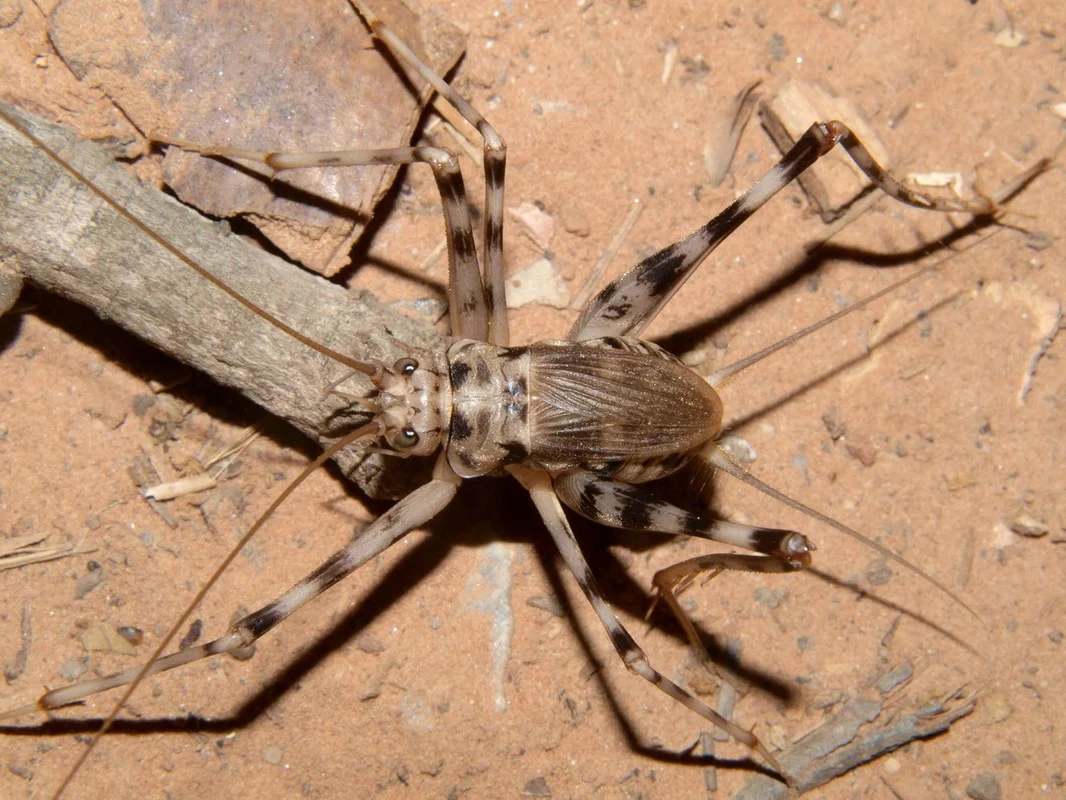
Other fascinating species include the African Cave Cricket (Phaeophilacris geertsi), which has evolved incredibly long antennae to navigate dark, cramped environments, and the flightless Wellington Weta (Hemideina crassidens) of New Zealand, which lives in rotting wood and feeds on decaying organic matter. In Australia, the Leaf-rolling Cricket (Hyalogryllacris subdebilis) is known for its long antennae, sometimes three times the length of its body. Finally, the House Cricket (Acheta domestica) and the Mediterranean Field Cricket (Gryllus bimaculatus) are common near human settlements, known for their characteristic nocturnal chirping. Understanding these species highlights the incredible biodiversity of our planet and the specialized niches each creature occupies.
#InsectFacts, #Grasshoppers, #Crickets, #Biodiversity, #NaturePhotography, #Entomology
Ads
0 comments
Related Posts
Ads